Aptent tincidunt lobortis eveniet! Molestie accusamus qui magna, consequatur posuere, sociosqu phasellus, nam sit dis fuga nemo eu, per duis vestibulum eveniet exercitationem assumenda, totam.
The CW-SLA network currently consists of a total of 209 SLAs. 89 groups are classified as mature, which means that they have successfully reached the desired level of maturity, which no longer requires supervision and support
YEARS OF FAITH AND ACTION
To encourage the members to take collective action towards work for social change using the principles of the Catholic Church
Developing Civil Society
Working on Catholic Face –Spirituality
Social Economic Sustainability
A society free from social injustice
Respect values like; human dignity, demand for equality, justice for all, etc. Transparency for all institutions; e.g. Family, Government, Church, NGOs, etc. Respect and adhere to laws, rules and procedures. Solve conflicts in a peaceful way.
Emphasize the good news from Jesus the worker Through your actions Promote democratic structures. Read and make public the encyclical for worker’s dignity. Be active in the church.
Economic improvement must be a collective not an individual process It must integrate or benefit all people in the society We have to develop alternative economic systems (like cooperatives) instead of capitalism We have to respect human dignity and nature for sustainability
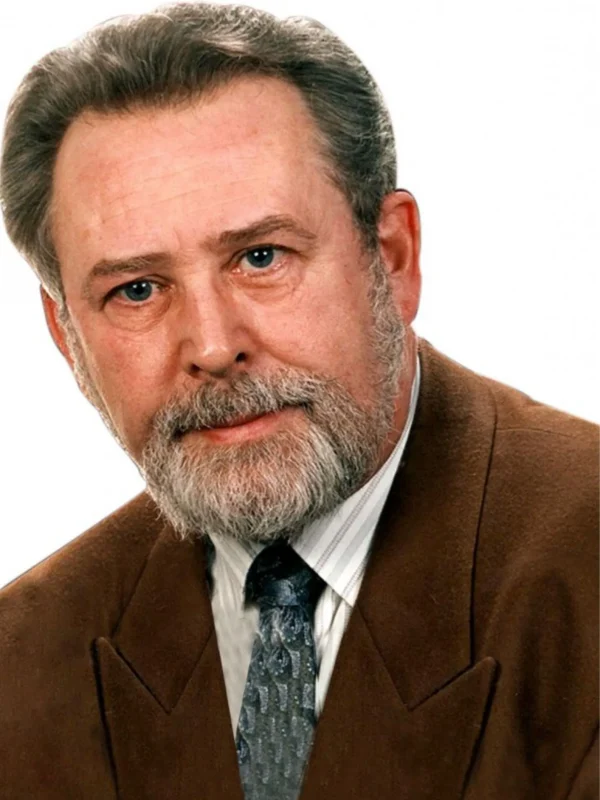
CWM started in Masaka Diocese in 1995. This was after protracted talks, discussions and contacts of the then Bishop of Masaka Diocese Rt. Rev. Adrian K. Ddungu (RIP) with friends of the Diocese in Germany. Finally, Mr. Werner Reiter and his wife Mrs. Agnes Reiter visited Uganda (Masaka) to introduce and establish the Movement. For this Parishes were identified as pilot Parishes and after an introduction seminar, CWM “was born” in Uganda (Masaka) in 1995.
The movement was warmly welcomed in the Diocese by both the Laity and the Clergy. This gave an impetus to the Bishop to invite again Mr. & Mrs. Reiter to make a follow up visit and to extend its services to other Parishes. Therefore, in 1997 CWM started in 42 Parishes in Masaka Diocese nearly covering the whole Diocese and the first General Assembly was held to elect the Executive Committee. The following year, 1998, Mr. & Mrs. Reiter led a delegation from Germany to spread further the movement into other Dioceses i.e. Kampala Archdiocese, Kiyinda – Mityana Diocese and Jinja Diocese.
In 1999, a National Assembly and workshop of the four member dioceses was held in Nsambya – Kampala and at the end of this workshop, the National Executive Committee was elected and mandated to consolidate and extend the movement.In 2001, CWM opened its gates in the Dioceses of Hoima, Kasese and Fort-Portal with a full Secretariat at Hoima. In the same year, contacts were made in Arua and Gulu but because of the rebel war then, no progress was made.
It is a great pleasure that after a long time, CWM was finally officially launched in Northern Uganda (2007) with a full secretariat in Gulu Archdiocese and later in 2010, in Arua Diocese.
In 2010, CWM was launched in the Diocese of Kasana-Luweero and in 2011, in the Diocese of Tororo. The most recent Diocese to join CWM Uganda is Kabale Diocese which was commissioned in 2012. Today, we have also contact member Dioceses e.g. Lugazi, Mbarara, Kotido and Lira.
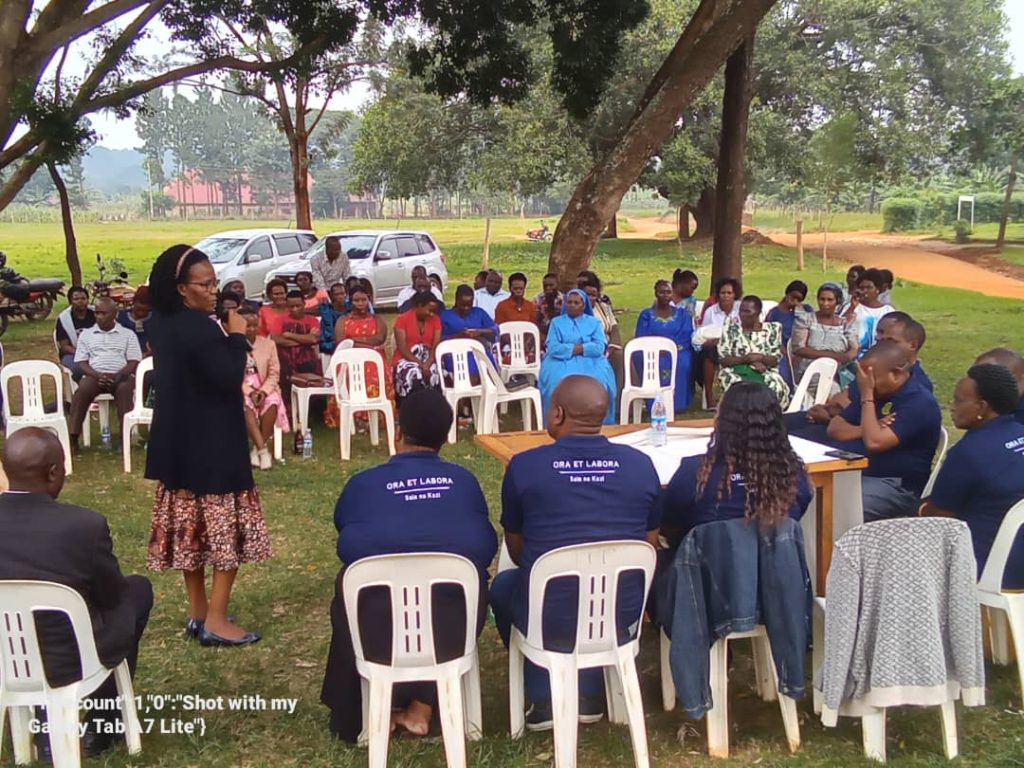
Women who are members of CWM can also form a Desk to work upon their spiritual, moral and material challenges. This is called the “Woman’s Desk” and it is so far working well in a few Dioceses.
In 2007, it was realised that the Youth had not taken part in CWM and so the Youth Desk was set up with the help of Rev. Fr. Thomas Schmollinger who was the Chaplain of the Young Christian Workers (CAJ) in the Diocese of Rottenburg Stuttgart, Germany. The Youth Desk is called “Young Catholic Workers Movement (YCWM)” and works with the Youth in Catholic Parishes and in Schools. YCWM started in Masaka Diocese and now spread to other Dioceses including Kampala, Kasana-Luweero, Tororo, Kasese, Jinja and Gulu. Plans are under way to extend it to more Dioceses after consolidation in the existing member Dioceses.
The historical analysis of the growth and spread of CWM indicates that it is a gradual process. It also shows that for the seed of CWM to germinate and grow, it must be provided with fertile ground i.e. it must be accepted by both the Laity, for it’s a Lay Apostolate Movement and by the clergy because it belongs to the Catholic Church with emphasis on spiritual and socio-economic background and intent.
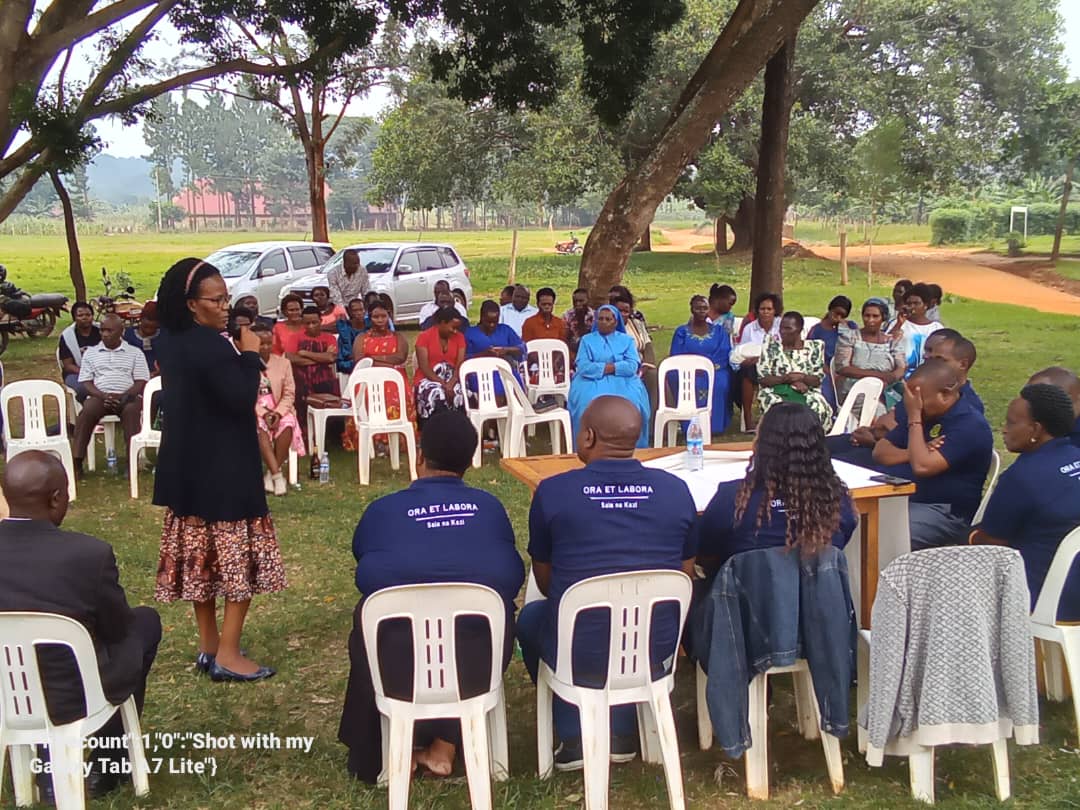
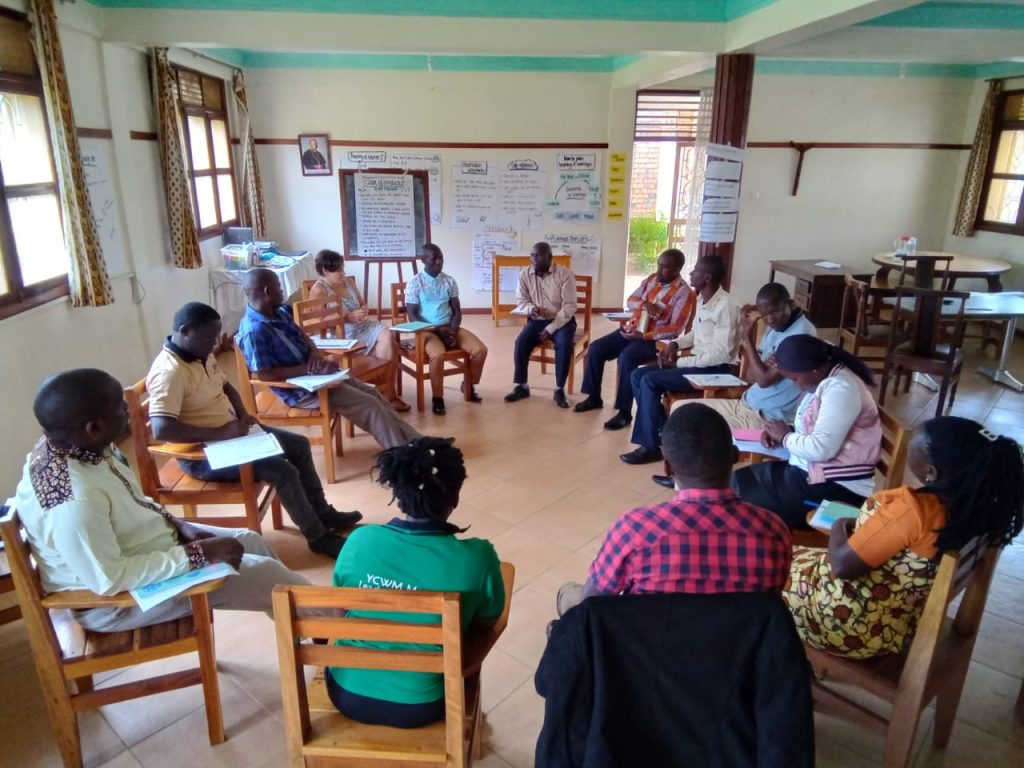
CWM does not dictate which activities members should undertake either as individuals or as a group. Members are guided to see, that it is to critically observe the prevailing situation in their environment. In this they make a SWOT analyze of their situation. They then use their findings to judge, that is to critically analyze the situation so as to identify and prioritize the possible actions to make life better.
At the end of it all, members are meant to act, that is not to sit back and lament but to do something in their ability. For anything beyond their ability, they are encouraged to use their voice as a group to access those who have the ability to help them.
CWM was started in 1995 with support from Werner Reiter and some active members of the Diocese of Regensburg in Germany. It was first introduced in the Diocese of Masaka, Kampala, Kiyinda Mityana, Jinja, and Hoima.
Copyright © 2026 Catholic Workers Movement.